
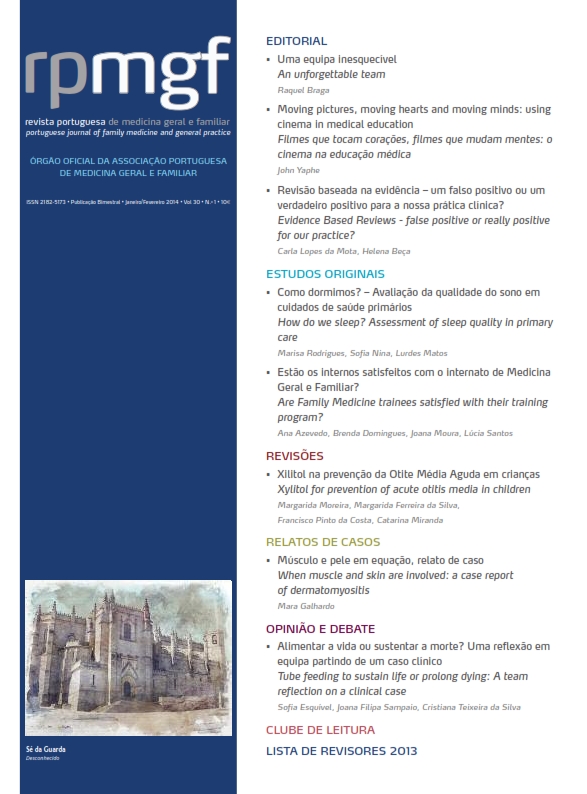
Xylitol for prevention of acute otitis media in children
DOI:
https://doi.org/10.32385/rpmgf.v30i1.11241Keywords:
Xylitol, Acute Otitis MediaAbstract
Aim: Acute otitis media (AOM) is a common illness in children and accounts for a significant proportion of antibiotic prescriptions. However antibiotic use is controversial since the disease may be self-limiting and recurrent in childhood and excessive antibiotic use may lead to increased bacterial resistance. Xylitol has potential in preventing AOM. This review examines the evidence for the effectiveness of xylitol in preventing AOM in children. Data sources: National Guideline Clearinghouse, NHS Evidence, Canadian Medical Association, Scottish Intercollegiate Guidelines, Evidence Based Medicine, InfoPOEMs, TRIP, The Cochrane Library, DARE, Bandolier and Medline. Review methods: A search was performed between January 2000 and May 2012, in Portuguese, English and Spanish, using otitis media and xylitol as MeSH terms. The Strength of Recommendation Taxonomy (SORT) scale was used to assess level of evidence and strength of recommendations. Results: Of the 106 articles found, 3 met the inclusion criteria. Two meta-analyses found evidence for the efficacy of xylitol in reducing the occurrence of AOM in children (Level of Evidence 2). A systematic review concluded that there was poor quality evidence for the use of xylitol in preventing AOM (Level of Evidence 2). Conclusions: Current evidence shows the efficacy of xylitol in preventing AOM in children (SORT B). Questions remain regarding the dose of xylitol, its long-term benefits, the duration of treatment, and the target population. Research on routes of administration providing better adherence to treatment in all age groups is needed.Downloads
Downloads
Published
Issue
Section
License
The authors will assign to the RPMGF the sole right to publish and distribute the content of the manuscript specified in this declaration via physical, electronic, broadcasting or any other medium that may come into existence. They also grant the RPMGF the right to use and exploit this manuscript, in particular by assigning, selling or licensing its content. This permission is permanent and takes effect from the moment the manuscript is submitted, has the maximum duration allowed by applicable Portuguese or international law and is of worldwide scope. The authors further declare that this assignment is made free of charge. If the RPMGF informs the authors that it is not going to publish their manuscript, the exclusive assignment of rights ceases forthwith.
The authors authorise the RPMGF (or any entity it may appoint) to act on their behalf when it believes that copyright may have been infringed.


